Hunting and Feeding Habits
Poisonous Snakes: Many venomous snakes rely on their venom to immobilize and kill their prey. For example, pit vipers use heat-sensitive pits to detect warm-blooded prey and inject venom to incapacitate them. This makes them more dangerous, as they rely on their venom to subdue animals that are much larger than themselves.
Non-Poisonous Snakes: Non-venomous snakes, such as boa constrictors and gopher snakes, typically rely on constriction to subdue their prey. They wrap around their prey and squeeze until it suffocates before swallowing it whole. While non-venomous, they are still capable of delivering painful bites if threatened.
3. What to Do If You Encounter a Snake
If you encounter a snake, it’s important to stay calm and take the following steps to ensure your safety:
Stay Calm and Keep Your Distance: Regardless of whether the snake is venomous or non-venomous, do not approach or attempt to handle it. Stay at least a few feet away from the snake and avoid making any sudden movements that could startle it.
Observe the Snake’s Behavior: If the snake is staying still or retreating, do not provoke it. Most snakes would rather avoid humans than engage in conflict.
Call for Help: If you are unsure about whether the snake is venomous, or if you’ve been bitten, seek medical help immediately. In the case of a venomous bite, time is of the essence, and prompt treatment is critical.
Learn More About Local Species: Understanding the snake species that live in your area can help you identify potential threats more effectively. Local wildlife or environmental agencies often provide useful information about which snakes are venomous and how to avoid encounters with them.
Conclusion: Safety First
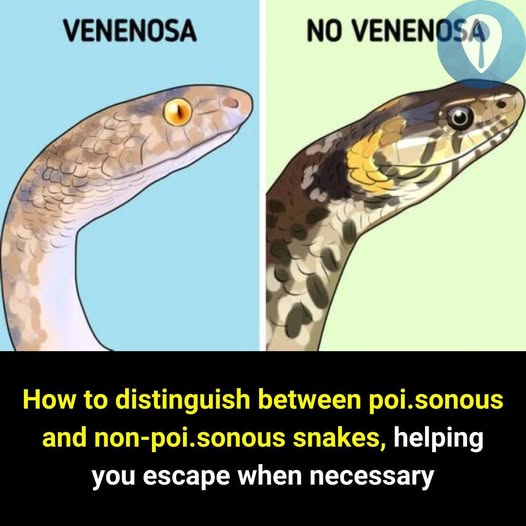
Being able to distinguish between poisonous and non-poisonous snakes is an important skill, especially if you live or travel in areas where snakes are common. By recognizing key physical features such as head shape, pupil shape, and color patterns, along with understanding the behavioral traits of different species, you can make more informed decisions when encountering snakes.
Remember, most snakes, even venomous ones, are not interested in attacking humans and would prefer to avoid confrontation. But if you are ever in doubt or find yourself in a dangerous situation, don’t hesitate to call for help. Awareness, caution, and knowledge of your environment are your best defenses when it comes to staying safe from snakes.
This article is for informational purposes only. If you are bitten by a snake, seek medical attention immediately, even if you think it is not venomous.
